Preventive Strikes: Women, Precancer, and Prophylactic Surgery

By Ilana Löwy

Modern scientific tools can identify a genetic predisposition to cancer before any disease is detectable. Some women will never develop breast or ovarian cancer, but they nevertheless must decide, as a result of genetic testing, whether to have their breasts and ovaries removed to avoid the possibility of disease. The striking contrast between the sophistication of diagnosis and the crudeness of preventive surgery forms the basis of historian Ilana Löwy’s important study. Löwy traces the history of prophylactic amputations through a century of preventive treatment and back to a long tradition of surgical management of gynecological problems. In the early twentieth century, surgeons came to believe that removing precancerous lesions – a term difficult to define even today – averted the danger of malignancy. This practice, Löwy finds, later led to surgical interventions for women with a hereditary predisposition to cancer but no detectable disease. Richly detailed stories of patients and surgeons in the United States, France, and the United Kingdom allow Löwy to compare the evolution of medical thought and practice – and personal choice – in these different cultures.

Preventive Strikes aims to improve our understanding of professional, social, and cultural responses to cancer in the twenty-first century and to inform our reflections about how values are incorporated into routine medical practices.

Read the book here.

Personalised Cancer Medicine: Future Crafting in the Genomic Era [Internet]

By Anne Kerr, Choon Key Chekar, Emily Ross, Julia Swallow & Sarah Cunningham-Burley

What does it mean to personalise cancer medicine?

Drawing on an ethnographic study with cancer patients, carers and practitioners in the UK, this book traces their efforts to access and interpret novel genomic tests, information and treatments as they craft personal and collective futures. Exploring multiple experiences of new diagnostic tests, research programmes and trials, advocacy and experimental therapies, the authors chart the different kinds of care and work involved in efforts to personalise cancer medicine, as well as the ways in which benefits and opportunities are unevenly realised and distributed. Comparing these experiences with policy and professional accounts of the ‘big’ future of personalised healthcare, the authors show how hope and care are multi-faceted, contingent and, at times, frustrated in the everyday complexities of living and working with cancer.

Read the book here.

Africanizing Oncology: Creativity, Crisis, and Cancer in Uganda

By Marissa Mika

Over the past decade, an increasingly visible crisis of cancer in Uganda has made local and international headlines. Based on transcontinental research and public engagement with the Uganda Cancer Institute that began in 2010, Africanizing Oncology frames the cancer hospital as a microcosm of the Ugandan state, as a space where one can trace the lived experiences of Ugandans in the twentieth century. Ongoing ethnographic fieldwork, patient records, oral histories, private papers from US oncologists, American National Cancer Institute records, British colonial office reports, and even the architecture of the institute itself show how Ugandans understood and continue to shape ideas about national identity, political violence, epidemics, and economic life.

Africanizing Oncology describes the political, social, technological, and biomedical dimensions of how Ugandans created, sustained, and transformed this institute over the past half century. With insights from science and technology studies and contemporary African history, Marissa Mika’s work joins a new wave of contemporary histories of the political, technological, moral, and intellectual aspirations and actions of Africans after independence. It contributes to a growing body of work on chronic disease and situates the contemporary urgency of the mounting cancer crisis on the continent in a longer history of global cancer research and care. With its creative integration of African studies, science and technology studies, and medical anthropology, Africanizing Oncology speaks to multiple scholarly communities.

Read the book here.

Virtually Virgins: Sexual Strategies and Cervical Cancer in Recife, Brazil

By Jessica L. Gregg

This book provides a detailed, intimate portrait of a community of women living in a shantytown (favela) in northeastern Brazil, while exploring the complex interplay between gender, sexuality, power, and disease. It reveals how poor Brasileiras are constrained by dominant cultural constructions of female sexuality as a dangerous force that must be controlled by men; yet these women also manipulate these expectations by using their sexuality as a means to secure economic support from men. The book argues that these constructions affect their interpretations of medical discourse on the prevention of cervical cancer. Since women view sex as both a force they can’t control and as a necessary tool for their survival, they choose to de-emphasize medical warnings against risky sexual behavior, with grave consequences for their health. The text is threaded with poignant, humorous, sometimes graphic, and always memorable depictions of the women’s lives in the shantytowns, making this serious anthropological study a highly readable one as well.

Read this book here.

On Infertile Ground: Population Control and Women’s Rights in the Era of Climate Change

By Jade S. Sasser

Since the turn of the millennium, American media, scientists, and environmental activists have insisted that the global population crisis is “back” – and that the only way to avoid catastrophic climate change is to ensure women’s universal access to contraception. Did the population problem ever disappear? What is bringing it back – and why now? In On Infertile Ground, Jade S. Sasser explores how a small network of international development actors, including private donors, NGO program managers, scientists, and youth advocates, is bringing population back to the center of public environmental debate. While these narratives never disappeared, Sasser argues, histories of human rights abuses, racism, and a conservative backlash against abortion in the 1980s drove them underground – until now.

Using interviews and case studies from a wide range of sites – from Silicon Valley foundation headquarters to youth advocacy trainings, the halls of Congress and an international climate change conference – Sasser demonstrates how population growth has been reframed as an urgent source of climate crisis and a unique opportunity to support women’s sexual and reproductive health and rights. Although well-intentioned – promoting positive action, women’s empowerment, and moral accountability to a global community – these groups also perpetuate the same myths about the sexuality and lack of virtue and control of women and the people of global south that have been debunked for decades. Unless the development community recognizes the pervasive repackaging of failed narratives, Sasser argues, true change and development progress will not be possible. On Infertile Ground presents a unique critique of international development that blends the study of feminism, environmentalism, and activism in a groundbreaking way. It will make any development professional take a second look at the ideals driving their work.

Read the book here.

Nations and Post-Colonialism in Central Asia: Twenty Years Later

By Sergei Abashin

The collapse of the USSR and the appearance instead of some 15 new states, not counting several territories declaring themselves to be states, has raised the inevitable question of how this space might now be reconfigured for analytical purposes. Should it, as used to be the case, be considered as an indivisible whole (as post-Soviet countries for example, or as Eurasia)? Or would it be better divided into separate parts, each correlated with other, wider delineations (North/South, West/East, the Christian/Islamic worlds etc.)? Both solutions have their reasons and goals, and, naturally, their pros and cons. In the first case, there is the risk of ascribing certain unique and uniform features to this space, while ignoring, on the one hand, its internal complexity and, on the other, its interaction with the rest of the world. In the second case, the opposite danger arises: of ignoring shared historical experiences and essentializing the borders, first and foremost the cultural borders, between the various communities that inhabit the space in question. Evidently, then, any strategy for analysis must be developed around the possibility of combining and aligning these two perspectives.

In this chapter, Abashin analyzes the new Central Asian states through the lens of three categories: nation, post-coloniality, and post-Sovietness. These terms are studied in how they are used to describe societies of Central Asia as well as models, similarities and differences, and what further questions these classifications prompt.

Read this chapter here.

Decolonial Keywords: South Asian Thoughts and Attitudes

By Renny Thomas and Sasanka Perera

This volume presents a set of keywords and concepts anchored in the region’s languages and its vast cultural landscape. It reiterates specific attitudes, ways of seeing and methods of doing, embedded in the historical and contemporary experiences in South Asia. The words, concepts, ideas, and attitudes in this volume explore the contexts of their production and how their meanings have changed at different historical moments. Individual essays, from across disciplines, argues for the importance in moving away from the intellectual shackles of colonial and neo-colonial experiences while also not succumbing to the traps of local reductionist nativisms and cultural nationalisms.

Find further information here.

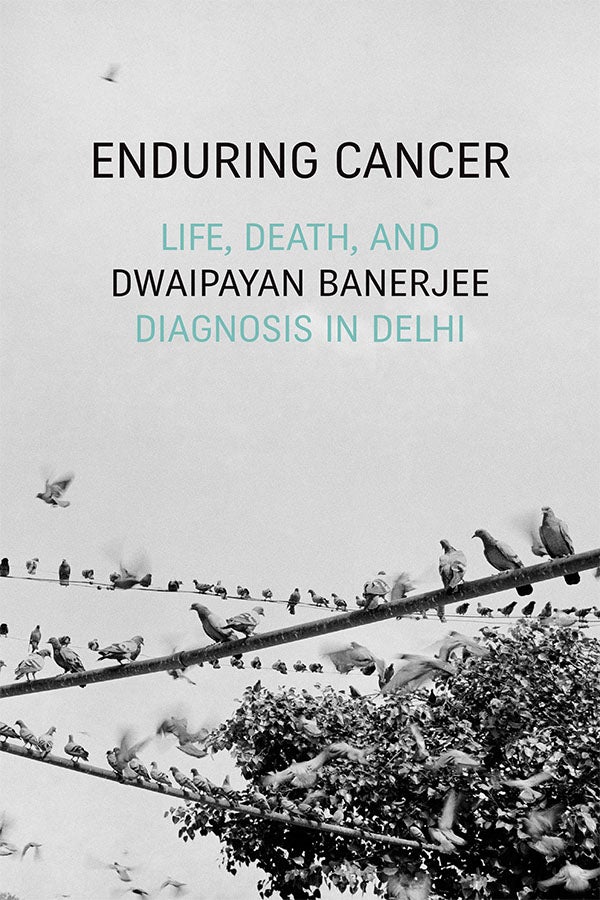
Enduring Cancer: Life, Death, and Diagnosis in Delhi

By Dwaipayan Banerjee

In Enduring Cancer Dwaipayan Banerjee explores the efforts of Delhi’s urban poor to create a livable life with cancer as patients and families negotiate an overextended health system unequipped to respond to the disease. Owing to long wait times, most urban poor cancer patients do not receive a diagnosis until it is too late to treat the disease effectively. Drawing on ethnographic fieldwork in the city’s largest cancer care NGO and at India’s premier public health hospital, Banerjee describes how, for these patients, a cancer diagnosis is often the latest and most serious in a long series of infrastructural failures. In the wake of these failures, Banerjee tracks how the disease then distributes itself across networks of social relations, testing these networks for strength and vulnerability. Banerjee demonstrates how living with and alongside cancer is to be newly awakened to the fragility of social ties, some already made brittle by past histories, and others that are retested for their capacity to support.

Read the full book here.

A History of Indigenous Australia and the University of Melbourne

By Dhoombak Goobgoowana

Dhoombak Goobgoowana can be translated as ‘truth telling’ in the Woi Wurrung language of the Wurundjeri Woi Wurrung people on whose unceded lands several University of Melbourne campuses are located.

Volume 1: Truth

This book, the first of two volumes, is an attempt to acknowledge and publicly address the long, complex and troubled relationship between the Indigenous people of what we now call the continent of Australia and the University of Melbourne.

It is a book about race and how it has been constructed by academics in the University. It is also about power and how academics have wielded it and justified its use against Indigenous populations, and about knowledge, especially the Indigenous knowledge that silently contributed to many early research projects and collection endeavours.

Although many things have changed, the stain of the past remains. But the University no longer wishes to look away.

Read Volume 1 of the book here.

Volume 2: Voice

Volume 2 reveals the pivotal role played by Indigenous people in the history of the University of Melbourne.

It traces the University’s role in ignoring and quietening Indigenous peoples’ voices, and the reverberations created by those voices that broke through. It shows how collections of art and cultural objects have transitioned from texts for western interpretation to expressions of self-identity. It reveals the Indigenous pioneers who gained admission to the University as students more than a century after it was established, and then later as staff, and documents their triumphs and struggles.

This second volume, following the revelations of Dhoombak Goobgoowana Volume I: Truth, shows how Indigenous communities challenged and disrupted the University, how they contributed to its research endeavours and exhorted it to introduce Indigenous knowledge into the academic sphere.

Imperfect, overdue and then often painfully slow, but marked by stories of courage and hope—this is what a history of inclusion looks like.

Read Volume 2 of the book here.

Aboriginal and Torres Strait Islander readers are advised that Dhoombak Goobgoowana contains images and names of people who have died. Readers are also advised that they may be disturbed by the content of this book, which includes distressing images and descriptions, and derogatory terms for Indigenous people used in their historical context.

Australia: Tainted Blood—Scientific Racism, Eugenics and Sanctimonious Treatments of Aboriginal Australians: 1869–2008

By Greg Blyton 

The Eugenics movement that emerged in England in the latter half of the nineteenth century was a continuance of European scientific racism sustained by a flotilla of political and academic ignorance that defined human credibility by hereditary traits, including colour and race. The movement may be defined as a European intellectual promotion to scientifically improve western societies through state systems that regulated human reproduction. In Australia, the foundations of the eugenics movement were heavily influenced by two former Cambridge University students, English scientists, Sir Francis Galton (1822–1911) and Charles Robert Darwin (1809–1882). It was a case of intellectual imperialism with colonial policymakers in Australia willingly adopting eugenics ideologies from their two English tutors. However, it would be unfair to blame a single man for the sanctimonious ways his concepts and theories were applied in policy and practice in relation to the treatment of Aboriginal Australians by Australian federal and state governments.

Read the full chapter here.

Create a website or blog at WordPress.com

Up ↑