Our Collections

What is Anti-Colonial Global Social Theory?

By Sujata Patel

Anti-colonial social theory is a set of ideas, assessments and practices of metatheoretical nature that have originated within anti-colonial thought. As a methodology, it theorizes and interrogates the ideological within the empirical, the theoretical, and the ‘scientific unconscious’ of fields/disciplines. While criticising late 19th Euro-American theories as universal set of propositions, it locates its limitations and presents ways to unravel the ideological-political elements that structure thought and scholarship. It also presents ways through which new global theories may be conceptualised and researched. The paper engages, analyses, compares and assesses various methodological interventions made by anti-colonial social theorists regarding colonialism, its origin and its continuities; its pasts and presents in distinct times and epochs and in its varied spatial geographies and suggests that these can become tools to define global social theory.

Read the article here.

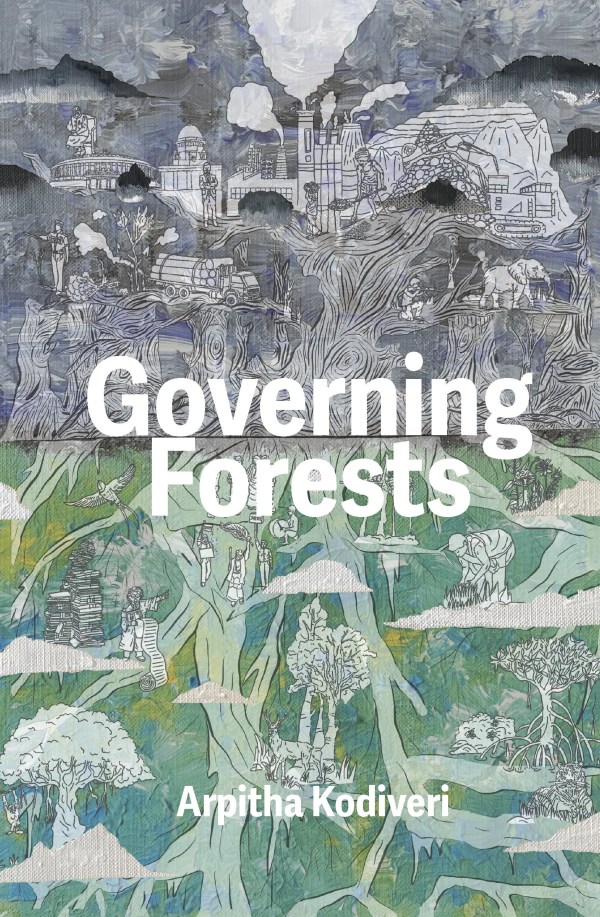
Governing Forests: State, Law and Citizenship in India’s Forests

By Arpitha Kodiveri

The nations of the Global North are responding to the climate change emergency with emissions trading schemes and alternative sources of energy. Meanwhile, nations of the Global South, still emerging from historical exploitation under colonialism, face decisions about natural resource use that are, for traditional owners and inhabitants of resource – rich lands, often a matter of life or death.

This book is the culmination of seven years immersed in the legal struggles of diverse forest-dwelling communities in India. Inspired by these social movements, Kodiveri tell the stories of how adivasi communities are using and shaping the law through clever legal interpretation and activism. The law Kodiveri shows is expanded, reframed and rendered malleable by forest-dwelling indigenous communities to be inclusive of their visions of justice, all while other laws seek to criminalize and erase their rights to land and waters.

Read the book here.

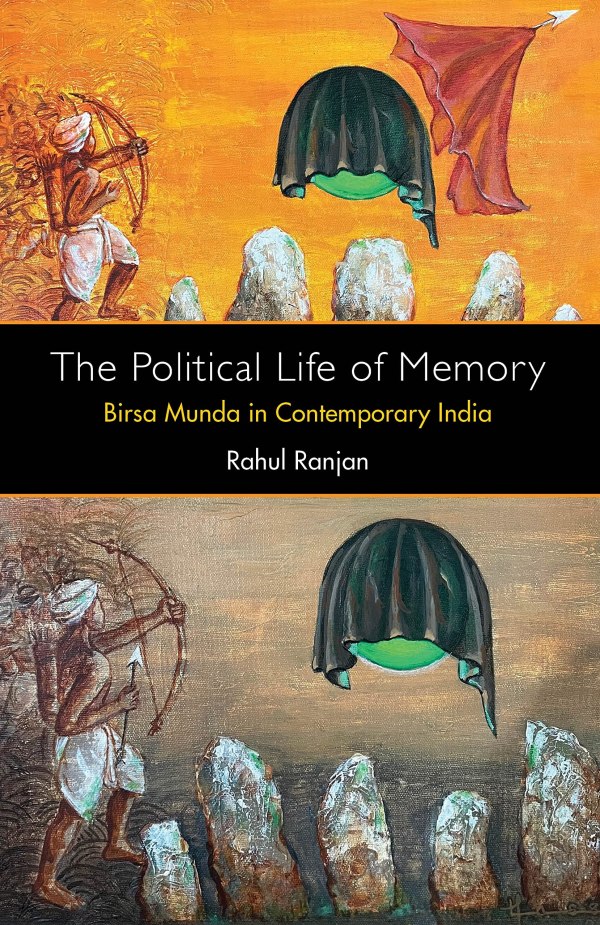
The Political Life of Memory: Birsa Munda in Contemporary India

By Rahul Ranjan

This book examines the representation of Birsa’s political life, memory politics and the making of anticolonialism in contemporary Jharkhand. It offers contrasting features of political imaginations deployed in developing memorial landscapes. Framing of Birsa in the heroic narrative through a grand scale of memorialisation, often in the form of the built environment, curates a selective version. This isolates the scope of elaborating his political ideas outside the confines of atypical historical records and their relevance in the contemporary context. The book argues that everyday politics through affective sites such as memorials and statues produce political visions, emotions, and opportunities. It shows how such symbolic sites are often strategically placed and politically motivated to inscribe ideologies. This process outlines how the state and Adivasi use memory as a political tool to lay claims to the past of the Birsa Movement.

Read the book here.

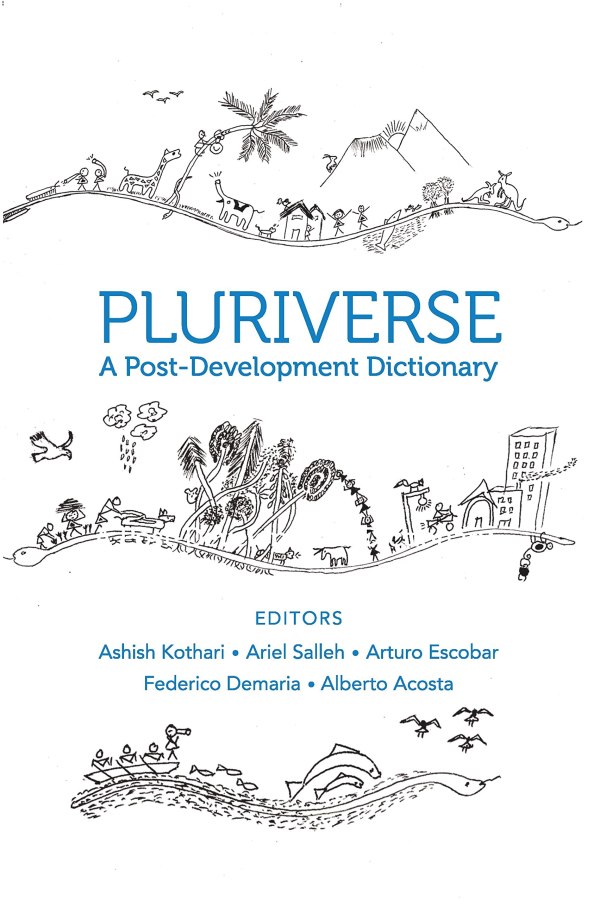
Pluriverse: A Post-Development Dictionary

Edited by Ashish Kothari, Ariel Salleh, Arturo Escobar, Federico Demaria, and Alberto Acosta

This book invites readers to join in a deep process of intellectual, emotional, ethical, and spiritual decolonization. The editors’ shared conviction is that the idea of ‘development as progress’ needs to be deconstructed to open a way for cultural alternatives that nurture and respect life on Earth. The dominant Western development model is a homogenizing construct, one that has usually been adopted by people across the world under material duress. The counter-term ‘post-development’ implies a myriad of systemic critiques and ways of living. This Dictionary is intended to re-politicize the ongoing debate over socio-ecological transformation by emphasizing its multi-dimensionality. It can be used for teaching and research; to inspire movement activists; to initiate the curious, and even those in power who no longer feel at ease with their world.

The editors are conscious of thematic and geographical gaps, but offer the book as an invitation to explore what they see as relational ‘ways of being’. This means remaking politics in a way that is deeply felt. Just so, in editing this book – as in any act of care – they themselves have encountered the limits of their own cultural reflexivity, even vulnerabilities, and in turn, discovered new understandings and acceptance. The ‘personal is political’, as feminists say. The book speaks to a worldwide confluence of economic, socio-political, cultural, and ecological visions. Each essay is written by someone who is deeply engaged with the world-view or practice described – from indigenous resisters to middle-class rebels.

The Dictionary is unconventional for its genre in having three parts. These reflect the historical transition that twenty-first century scholars and activists must work in: Development and Its Crises, Universalizing the Earth, and A People’s Pluriverse. The visions and practices contained in this Dictionary are not about applying a set of policies, instruments and indicators to exit ‘maldevelopment’. Rather, they are about recognizing the diversity of people’s views on planetary well-being and their skills in protecting it. They seek to ground human activities in the rhythms and frames of nature, respecting the interconnected materiality of all that lives. This indispensible knowledge needs to be held safe in the commons, not privatized or commodified for sale. The visions and practices offered here put buen vivir before material accumulation. They honour cooperation rather than competitiveness as the norm. They see work in pleasurable livelihoods, not ‘deadlihoods’ to escape from on weekends or ecotouristic vacations. Again, too often in the name of ‘development’, human creativity is destroyed by dull, homogenizing education systems.

They assemble this Dictionary to help in the collective search for an ecologically wise and socially just world. They envisage the book as contributing to a journey towards a Global Tapestry of Alternatives, strengthening hope and inspiration by learning from each other; strategizing advocacy and action; and building collaborative initiatives. In doing so, they do not underestimate the epistemological, political, and emotional challenges of remaking our own histories.

Read the full book here.
Decolonization of Education Research, Policy-making, and Practice in Central Asia: The Case of Tajikistan

By Sarfaroz Niyozov and Stephen A. Bahry

This chapter in Annual Review of Comparative and International Education 2021 reviews the challenges facing educational research and knowledge production, in the independent post-Soviet Central Asia through examination of the case of Tajikistan.

The chapter revisits issues discussed in Niyozov and Bahry (2006) on the need for research-based approaches to with these challenges, taking up Tlostanova’s (2015) challenge to see Central Asian educational history as repeated intellectual colonization, decolonization, and recolonization leading her to question whether Central Asians can think, or must simply accept policies and practices that travel from elsewhere. The authors respond by reviewing Tajikistan as representative in many aspects, if not all particulars, of the entire region. Part one of the review describes data sources, analyses, and our positionalities. Part two reviews decolonization in comparative, international, and development education and in post-Soviet education. Part three describes education research and knowledge production types and their key features. Thereafter, the authors discuss additional challenges facing Tajikistan’s and the region’s knowledge production and link them to the possibilities of decolonization discourse.

The authors conclude by suggesting realistic steps the country’s scholars and their comparative international education colleagues may take to move toward developing both research capacity and decolonization of knowledge pursuits in Tajikistan and Central Asia.

Read this chapter here.

Osiris (Vol. 39): Disability and the History of Science

Edited by Jaipreet Virdi, Mara Mills, and Sara F. Rose

Disability has been a central—if unacknowledged—force in the history of science, as in the scientific disciplines. Across historical epistemology and laboratory research, disability has been “good to think with”: an object of investigation made to yield generalizable truths. Yet disability is rarely imagined to be the source of expertise, especially the kind of expertise that produces (rational, neutral, universal) scientific knowledge.

This volume of Osiris places disability history and the history of science in conversation to foreground disability epistemologies, disabled scientists, and disability sciencing (engagement with scientific tools and processes). Looking beyond paradigms of medicalization and industrialization, the volume authors also examine knowledge production about disability from the ancient world to the present in fields ranging from mathematics to the social sciences, resulting in groundbreaking histories of taken-for-granted terms such as impairment, infirmity, epidemics, and shōgai.

Some contributors trace the disabling impacts of scientific theories and practices in the contexts of war, factory labor, insurance, and colonialism; others excavate racial and settler ableism in the history of scientific facts, protocols, and collections; still others query the boundaries between scientific, lay, and disability expertise. Contending that disability alters method, authors bring new sources and interpretation techniques to the history of science, overturn familiar narratives, apply disability analyses to established terms and archives, and discuss accessibility issues for disabled historians. The resulting volume announces a disability history of science.

Read the book here.

The Hidden Dimensions of Human–Wildlife Conflict: Health Impacts, Opportunity and Transaction Costs

By Maan Barua, Shonil A. Bhagwat, and Sushrut Jadhav 

The impact of conservation policies on human wellbeing is critical to the integration of poverty alleviation and biodiversity conservation. In many low-income countries, human–wildlife conflict adversely affects wellbeing of communities that closely interface with wildlife. Approaches to framing and mitigating conflict emphasize its visible costs. Hidden impacts, i.e. costs that are uncompensated, temporally delayed, or psychosocial in nature, remain poorly addressed. This paper examines the hidden impacts of human–wildlife conflict in low-income countries. It presents an account of the known and potential hidden impacts, investigating their effects on rural communities. Hidden impacts of human–wildlife conflict include diminished psychosocial wellbeing, disruption of livelihoods and food insecurity. Considerable opportunity costs are incurred through crop and livestock guarding. When seeking compensation for damage, bureaucratic inadequacies result in added transaction costs. Even though communities may be tolerant of wildlife, the hidden impacts of conflict jeopardize various components of global wellbeing. The paper concludes by identifying gaps in knowledge and outlining areas for future research that better address hidden dimensions of human–wildlife conflict.

Read the article here.

Cancer Entangled: Anticipation, Acceleration, and the Danish State

Edited by Rikke Sand Andersen and Marie Louise Tørring

Cancer Entangled explores the shifts that took place in Denmark around the millennium, when health promoters set out to minimize delays in cancer diagnoses in hope of improving cancer survival. The authors suggest a temporal reframing of cancer control that emphasizes the importance of focusing on how people – potential patients as well as health care professionals – experience and anticipate cancer before a diagnosis or a prediction has been made. This argument compellingly challenges and augments anthropological work on cancer control that has privileged attention to the productive role of science and technology and to life with cancer or cancer risk. By offering rich ethnographic insights into the introduction of the first cancer vaccine, cancer signs and symptoms, public discourses on delays, social class and care seeking, cancer suspicion in the clinic, as well as the work on fast-track referral – the book convincingly situates cancer control in an ethical registrar involving attention to acceleration and time, showing how cancer waiting times become an index of the “state of the nation”.

Read the book here.

Survivorship: A Sociology of Cancer in Everyday Life

By Alex Broom and Katherine Kenny

This book provides a contemporary and comprehensive examination of cancer in everyday life, drawing on qualitative research with people living with cancer, their family members and health professionals. It explores the evolving and enduring affects of cancer for individuals, families and communities, with attention to the changing dynamics of survivorship, including social relations around waiting, uncertainty, hope, willfulness, obligation, responsibility and healing. Challenging simplistic deployments of survivorship and drawing on contemporary and classical social theory, it critically examines survivorship through innovative qualitative methodologies including interviews, focus groups, participant produced photos and solicited diaries. In assembling this panoramic view of cancer in the twenty-first century, it also enlivens core debates in sociology, including questions around individual agency, subjectivity, temporality, normativity, resistance, affect and embodiment. A thoughtful account of cancer embedded in the undulations of the everyday, narrated by its subjects and those who informally and formally care for them, Survivorship: A Sociology of Cancer in Everyday Life outlines new ways of thinking about survivorship for sociologists, health and medical researchers and those working in cancer care settings.

Read the book here.

Create a website or blog at WordPress.com

Up ↑