Our Collections

Are hospitals collateral damage? Assessing geospatial proximity of 2000 lb bomb detonations to hospital facilities in the Gaza Strip from October 7 to November 17, 2023

By Dennis Kunichoff, David Mills, Yara Asi, Sawsan Abdulrahim, Bram Wispelwey, Osama Tanous, A. Kayum Ahmed, Weeam Hammoudeh, Nadine Bahour, Mary T. Bassett, and P. Gregg Greenough.

After attacks in Israel led by Hamas militants on October 7, 2023, Israel launched a major military campaign in the Gaza Strip that has featured an unprecedented scale of destruction. This has included the use of highly destructive weapons in a densely populated area. Mark-84 bombs (M-84s) are 2000 lb air-dropped explosive munitions with the capacity to damage infrastructure and kill or cause severe injury hundreds of meters away. This study examines the proximity of M-84 bomb detonations to hospital infrastructure in the Gaza Strip. This article combined geospatial data on hospital locations across the Gaza Strip with maps of the locations of M-84 bomb craters between October 7 and November 17, 2023, published by CNN and New York Times. This study then measured and summarized the proximity of the bomb craters to hospitals across the territory. This article identified 592 M-84 bomb craters. Of the 36 hospitals across the Gaza Strip, 25% (n = 9) had at least one bomb crater within the lethal range (360 m) and 83.3% (n = 30) within the infrastructure damage and injury range (800 m) of their facilities. The shortest distance of a bomb crater from a hospital was 14.7 m. Two hospitals had as many as 23 and 21 bomb craters within 800 m of their facilities and one hospital had seven bomb craters within 360 m. Thirty-eight M-84 bombs were detonated within 800 m of hospitals in the Israeli military defined evacuation zone. Given the known blast effect of these M-84 bombs, the impact from the bomb detonations near hospitals likely killed and injured people in and around the hospital area, which could include civilians and hospital staff, and likely damaged hospital infrastructure. The results of this study suggest indiscriminate bombing in dangerous proximities to hospital infrastructure, which is afforded special protection under international humanitarian law (IHL)

Read the article here.
Unbearable suffering: mental health consequences of the October 2023 Israeli military assault on the Gaza Strip

By Hanna Kienzler, Gwyn Daniel, Weeam Hammoudeh, Rana Nashashibi, Yasser Abu-Jamei, and Rita Giacaman.

The onslaught on Gaza is leading to catastrophic psychological consequences which will not be limited to the short term and to those directly affected, but will have long-term, intergenerational effects.

This commentary argues that to understand trauma responses among Gazans, we need to go beyond individual illness and, instead, link the biomedical sphere with the political sphere through the concept of social suffering and, thereby, expose the socio-political conditions of life and the collective trauma-inducing nature of the Israeli military occupation and repression.

Addressing these complex trauma responses requires approaches that bring together the political, social and personal-level components of mental health with a focus on three factors: safety and allyship; the right to agency and acknowledgement, accountability and reparations.

Read the article here.

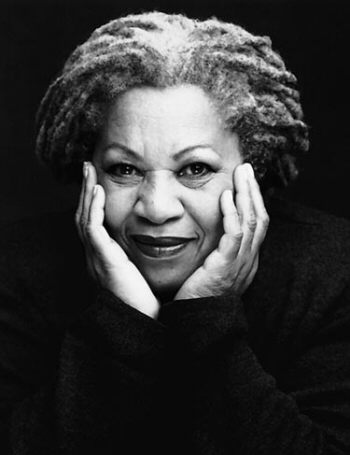
    A Humanist View: A Speech

    By Toni Morrison

    Excerpt from [35:46]

    “It’s important, therefore, to know who the real enemy is, and to know the function, the very serious
    function of racism, which is distraction. It keeps you from doing your work. It keeps you explaining over and over
    again, your reason for being. Somebody says you have no language and so you spend 20 years proving that you do. Somebody says your head isn’t shaped properly so you have scientists working on the fact that it is.
    Somebody says that you have no art so you dredge that up. Somebody says that you have no kingdoms and so
    you dredge that up.
    None of that is necessary. There will always be one more thing.”

    Read the full transcript here, listen to the full audio here.

    Because its power remains naturalized: introducing the settler colonial determinants of health

    By Bram Wispelwey, Osama Tanous, Yara Asi, Weeam Hammoudeh, and David Mills

    Indigenous people suffer earlier death and more frequent and severe disease than their settler counterparts, a remarkably persistent reality over time, across settler colonized geographies, and despite their ongoing resistance to elimination. Although these health inequities are well-known, they have been impervious to comprehensive and convincing explication, let alone remediation. Settler colonial studies, a fast-growing multidisciplinary and interdisciplinary field, is a promising candidate to rectify this impasse. Settler colonialism’s relationship to health inequity is at once obvious and incompletely described, a paradox arising from epistemic coloniality and perceived analytic challenges that we address here in three parts. First, in considering settler colonialism an enduring structure rather than a past event, and by wedding this fundamental insight to the ascendant structural paradigm for understanding health inequities, a picture emerges in which this system of power serves as a foundational and ongoing configuration determining social and political mechanisms that impose on human health. Second, because modern racialization has served to solidify and maintain the hierarchies of colonial relations, settler colonialism adds explanatory power to racism’s health impacts and potential amelioration by historicizing this process for differentially racialized groups. Finally, advances in structural racism methodologies and the work of a few visionary scholars have already begun to elucidate the possibilities for a body of literature linking settler colonialism and health, illuminating future research opportunities and pathways toward the decolonization required for health equity.

    Read the article here.

    Living the Body: Embodiment, Womanhood and Identity in Contemporary India

    By Meenakshi Thapan

    This book explores the development of a sociology of embodiment in the context of women’s lives in contemporary, urban India. Through a critical analysis of gender and class, the author unravels the complexities that are intrinsic to the multi-layered and fluid construction of a woman’s identity in relation to embodiment.

    Living the Body: Embodiment, Womanhood and Identity in Contemporary India is the first book that unfolds an understanding of women’s experience of embodiment by a careful analysis of the facts gathered from an Indian metropolis. The author brings out numerous voices representing multiple subjectivities through interviews of working class slum women, professional upper class women, adolescent young women in secondary schools and in a slum, and the visual and textual representation of women in a women’s magazine in English.

    Read the book here.

    Kitchen-table Society: A Case Study of the Family Life and Friendships of Young Working-class Mothers in Urban Norway

    By Marianne Gullestad

    Through two years of anthropological fieldwork in the suburbs of Bergen, Norway’s second-largest city, the author has listened carefully to the conversations of young working-class women. In this intimate study, she examines how the lives of these women are shaped, what dignity and self-respect mean to them, and how they define their identities as women. This book discusses topics such as the rising rate of divorce, women’s culture, and how these women play a crucial role in creating and maintaining a cultural lifestyle for their families.

    Read the book here.

    Pills That Swallow Policy: Clinical Ethnography of a Community Mental Health Program in Northern India

    By Sumeet Jain and Sushrut Jadhav

    India’s National Mental Health Program (NMHP) was initiated in 1982 with the objective of promoting community participation and accessible mental health services. A key component involves central government calculation and funding for psychotropic medication. Based on clinical ethnography of a community psychiatry program in north India, this article traces the biosocial journey of psychotropic pills from the centre to the periphery. As the pill journeys from the Ministry of Health to the clinic, its symbolic meaning transforms from an emphasis on accessibility and participation to the administration of a discrete ‘treatment’. Instead of embodying participation and access, the pill achieves the opposite: silencing community voices, re-enforcing existing barriers to care, and relying on pharmacological solutions for psychosocial problems. The symbolic inscription of NMHP policies on the pill fail because they are undercut by more powerful meanings generated from local cultural contexts. An understanding of this process is critical for the development of training and policy that can more effectively address local mental health concerns in rural India.

    Read the article here.

    Bodies in Evidence: Race, Gender, and Science in Sexual Assault Adjudication

    By Heather R. Hlavka and Sameena Mulla

    For victims in sexual assault cases, trials rarely result in justice. Instead, the courts drag defendants, victims, and their friends and family through a confusing and protracted public spectacle. Along the way, forensic scientists, sexual assault nurse examiners, and police officers provide their insight and expertise, shaping the story that emerges for the judge and jury. These expert narratives intersect with the stories of victims, witnesses, and their communities to reproduce our cultural understandings of sexual violence, but too often this process results in reinscribing racial, gendered, and class inequalities.

    Bodies in Evidence draws on observations of over 680 court appearances in Milwaukee County’s felony sexual assault courts, as well as interviews with judges, attorneys, forensic scientists, jurors, sexual assault nurse examiners, and victim advocates. It shows how forensic science helps to propagate public misunderstandings of sexual violence by bestowing an aura of authority to race and gender stereotypes and inequalities. Expert testimony reinforces the idea that sexual assault is physically and emotionally recognisable and always leaves material evidence. The court’s reliance on the presence of forensic evidence infuses these very familiar stereotypes and myths about sexual assault with new scientific authority.

    Read the book here.

    In The Belly Of The River : Tribal Conflicts Over Development In The Narmada Valley

    By Amita Baviskar

    Why are adivasis fighting the Narmada dam and other development projects in India today? Are adivasis ‘ecologically noble savages’ living in harmony with nature? What is the tribal relationship with nature today? How do people, whose struggles are the subject of theories of liberation and social change, perceive their own situation? Do their present circumstances allow adivasis to formulate a critique of ‘development’?

    In the Belly of the River addresses these questions through an account of the lives of Bhilala adivasis in the Narmada valley who are fighting against displacement by the Sardar Sarovar dam in western India. On the basis of intensive fieldwork and historical research, this study places the tribal community in the context of its experience of state domination. Combining aspects of adivasi kinship and religion with the political economy of resource use, the book highlights the contradictions inherent in tribal relationships with nature – contradictions that permeate adivasi consciousness as well as practices

    Read the book here.

    MAP: Museum of Art & Photography

    Located in Bangalore, India.

    MAP is home to a growing collection of paintings, sculptures, textiles, photographs, popular culture, and more dating from the 10th century to the present day. The museum spans six storeys and includes art galleries, digital experience centres, and a dedicated research and conservation lab. MAP is a melting pot of ideas, stories and cultural exchange where we hope to encourage humanity, empathy, and a deeper understanding of the world we live in, through art.

    As South India’s first major private art museum, MAP wants to help recognise the transformative power of the arts! It brims with ideas and conversations that enable cultural exchanges between our several communities. MAP inspires people to interact with art in ways that encourage humanity, empathy, and a deeper understanding of the world in which we live.

    With a lot of materials published and accessible online, you can engage with the art through online exhibitions from wherever you are.

    Access the museum website here.

    Create a website or blog at WordPress.com

    Up ↑