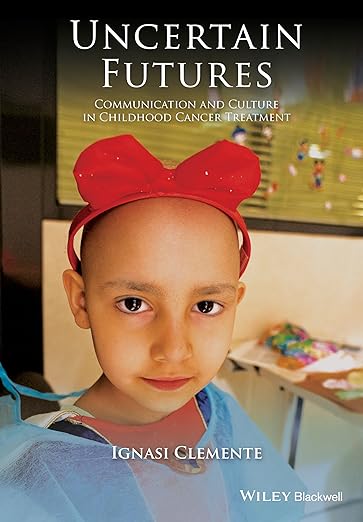
Uncertain Futures: Communication and Culture in Childhood Cancer Treatment

By Ignasi Clemente

This book examines children and young people’s attempts to participate in conversations about their own treatment throughout uncertain cancer trajectories, including the events leading up to diagnosis, treatment, remission, relapse, and cure or death. Clearly and compellingly written, Clemente relies on a new multi-layered method to identify six cancer communication strategies. This book illustrates that communication is central to how children, parents, and healthcare professionals constitute, influence, and make sense of the social worlds they inhabit—or that they want to inhabit. It provides ethnographic case studies of childhood cancer patients in Spain, using children’s own words, and examines the challenges of how to talk to and how to encourage patients’ involvement in treatment discussions. In his critique of the “telling” versus “not telling” debates, Clemente argues that communication should be adjusted to the children’s own needs, and that children’s own questions can indicate how much or little they want to be involved.

Read the book here.

Decolonizing play: Rediscovering and revitalizing traditional play practices in post-colonial context

By Euis Kurniati and Sadick Akida Mwariko

This study examines the decolonization of play through the rediscovery and revitalization of traditional play practices in the post-colonial era. Through a comprehensive literature review, the research examines the historical suppression of indigenous play forms and their contemporary resurgence. The research highlights the cultural significance of these traditional practices, emphasizing their role in identity formation and social cohesion. Findings suggest that traditional play practices are integral to cultural heritage and offer substantial benefits when integrated into modern education, particularly in early childhood education frameworks. This study advocates for a paradigm shift towards a culturally responsive pedagogy that respects and incorporates indigenous knowledge. To achieve effective decolonization, educators, policymakers, and communities must collaborate in developing educational frameworks that honor and integrate diverse cultural traditions. This approach will not only preserve cultural heritage but also enhance educational equity and inclusivity. The revitalization of traditional play practices represents a significant step towards a more culturally aware and equitable educational environment, contributing to a richer and more inclusive early childhood education experience.

Read the full article here.

Create a website or blog at WordPress.com

Up ↑