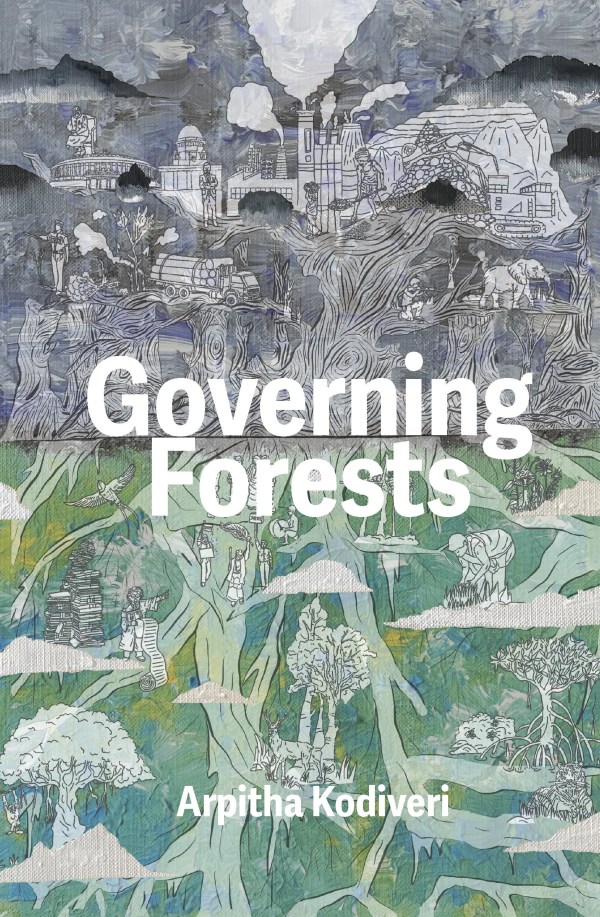
Governing Forests: State, Law and Citizenship in India’s Forests

By Arpitha Kodiveri

The nations of the Global North are responding to the climate change emergency with emissions trading schemes and alternative sources of energy. Meanwhile, nations of the Global South, still emerging from historical exploitation under colonialism, face decisions about natural resource use that are, for traditional owners and inhabitants of resource – rich lands, often a matter of life or death.

This book is the culmination of seven years immersed in the legal struggles of diverse forest-dwelling communities in India. Inspired by these social movements, Kodiveri tell the stories of how adivasi communities are using and shaping the law through clever legal interpretation and activism. The law Kodiveri shows is expanded, reframed and rendered malleable by forest-dwelling indigenous communities to be inclusive of their visions of justice, all while other laws seek to criminalize and erase their rights to land and waters.

Read the book here.

The Hidden Dimensions of Human–Wildlife Conflict: Health Impacts, Opportunity and Transaction Costs

By Maan Barua, Shonil A. Bhagwat, and Sushrut Jadhav 

The impact of conservation policies on human wellbeing is critical to the integration of poverty alleviation and biodiversity conservation. In many low-income countries, human–wildlife conflict adversely affects wellbeing of communities that closely interface with wildlife. Approaches to framing and mitigating conflict emphasize its visible costs. Hidden impacts, i.e. costs that are uncompensated, temporally delayed, or psychosocial in nature, remain poorly addressed. This paper examines the hidden impacts of human–wildlife conflict in low-income countries. It presents an account of the known and potential hidden impacts, investigating their effects on rural communities. Hidden impacts of human–wildlife conflict include diminished psychosocial wellbeing, disruption of livelihoods and food insecurity. Considerable opportunity costs are incurred through crop and livestock guarding. When seeking compensation for damage, bureaucratic inadequacies result in added transaction costs. Even though communities may be tolerant of wildlife, the hidden impacts of conflict jeopardize various components of global wellbeing. The paper concludes by identifying gaps in knowledge and outlining areas for future research that better address hidden dimensions of human–wildlife conflict.

Read the article here.

Create a website or blog at WordPress.com

Up ↑