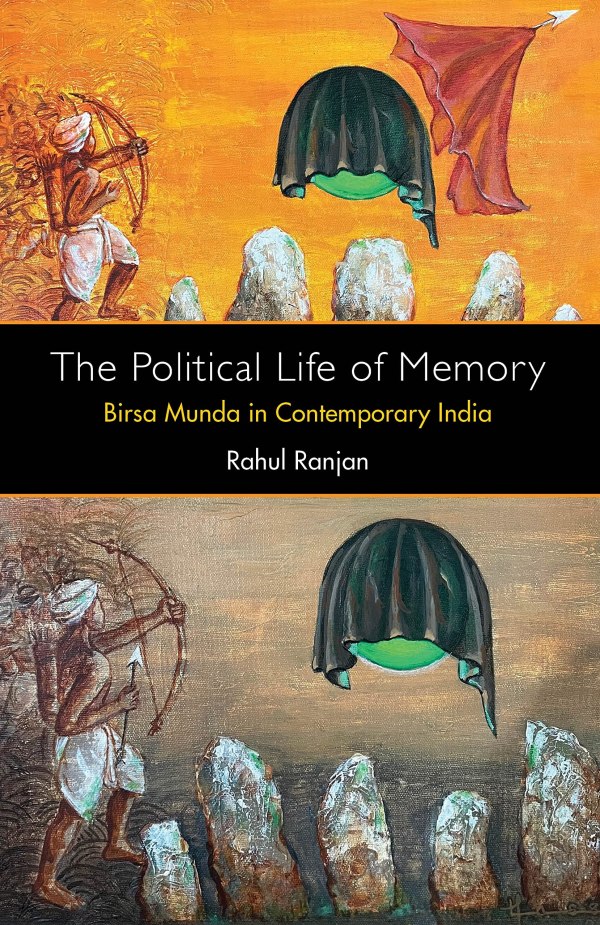
The Political Life of Memory: Birsa Munda in Contemporary India

By Rahul Ranjan

This book examines the representation of Birsa’s political life, memory politics and the making of anticolonialism in contemporary Jharkhand. It offers contrasting features of political imaginations deployed in developing memorial landscapes. Framing of Birsa in the heroic narrative through a grand scale of memorialisation, often in the form of the built environment, curates a selective version. This isolates the scope of elaborating his political ideas outside the confines of atypical historical records and their relevance in the contemporary context. The book argues that everyday politics through affective sites such as memorials and statues produce political visions, emotions, and opportunities. It shows how such symbolic sites are often strategically placed and politically motivated to inscribe ideologies. This process outlines how the state and Adivasi use memory as a political tool to lay claims to the past of the Birsa Movement.

Read the book here.

Africanizing Oncology: Creativity, Crisis, and Cancer in Uganda

By Marissa Mika

Over the past decade, an increasingly visible crisis of cancer in Uganda has made local and international headlines. Based on transcontinental research and public engagement with the Uganda Cancer Institute that began in 2010, Africanizing Oncology frames the cancer hospital as a microcosm of the Ugandan state, as a space where one can trace the lived experiences of Ugandans in the twentieth century. Ongoing ethnographic fieldwork, patient records, oral histories, private papers from US oncologists, American National Cancer Institute records, British colonial office reports, and even the architecture of the institute itself show how Ugandans understood and continue to shape ideas about national identity, political violence, epidemics, and economic life.

Africanizing Oncology describes the political, social, technological, and biomedical dimensions of how Ugandans created, sustained, and transformed this institute over the past half century. With insights from science and technology studies and contemporary African history, Marissa Mika’s work joins a new wave of contemporary histories of the political, technological, moral, and intellectual aspirations and actions of Africans after independence. It contributes to a growing body of work on chronic disease and situates the contemporary urgency of the mounting cancer crisis on the continent in a longer history of global cancer research and care. With its creative integration of African studies, science and technology studies, and medical anthropology, Africanizing Oncology speaks to multiple scholarly communities.

Read the book here.

Create a website or blog at WordPress.com

Up ↑