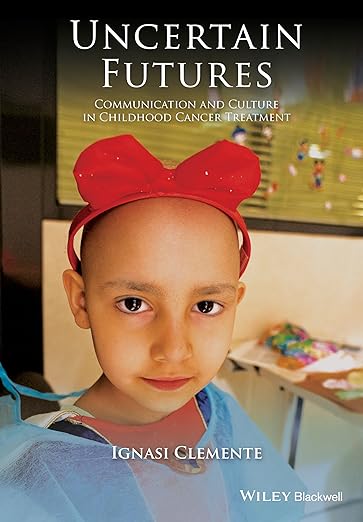
Uncertain Futures: Communication and Culture in Childhood Cancer Treatment

By Ignasi Clemente

This book examines children and young people’s attempts to participate in conversations about their own treatment throughout uncertain cancer trajectories, including the events leading up to diagnosis, treatment, remission, relapse, and cure or death. Clearly and compellingly written, Clemente relies on a new multi-layered method to identify six cancer communication strategies. This book illustrates that communication is central to how children, parents, and healthcare professionals constitute, influence, and make sense of the social worlds they inhabit—or that they want to inhabit. It provides ethnographic case studies of childhood cancer patients in Spain, using children’s own words, and examines the challenges of how to talk to and how to encourage patients’ involvement in treatment discussions. In his critique of the “telling” versus “not telling” debates, Clemente argues that communication should be adjusted to the children’s own needs, and that children’s own questions can indicate how much or little they want to be involved.

Read the book here.

The Cultural Origins of Western Depression

By Sushrut Jadhav

Focusing on the British cultural vocabulary of guilt, fatigue, energy, stress and depression; this paper argues that such vocabularies have their own unique histories and meanings; deeply embedded, in this instance, within “white British and western European” institutions. Predicated on a western epistemology, these constructs developed in response to prevailing concerns at different periods in western history; but are now assumed to be universal natural entities that await further scientific research and investigation. The cross-cultural validity of depression as a universal disorder is therefore dubious and needs an extensive re-examination.

Read the article here.

Kitchen-table Society: A Case Study of the Family Life and Friendships of Young Working-class Mothers in Urban Norway

By Marianne Gullestad

Through two years of anthropological fieldwork in the suburbs of Bergen, Norway’s second-largest city, the author has listened carefully to the conversations of young working-class women. In this intimate study, she examines how the lives of these women are shaped, what dignity and self-respect mean to them, and how they define their identities as women. This book discusses topics such as the rising rate of divorce, women’s culture, and how these women play a crucial role in creating and maintaining a cultural lifestyle for their families.

Read the book here.

Create a website or blog at WordPress.com

Up ↑