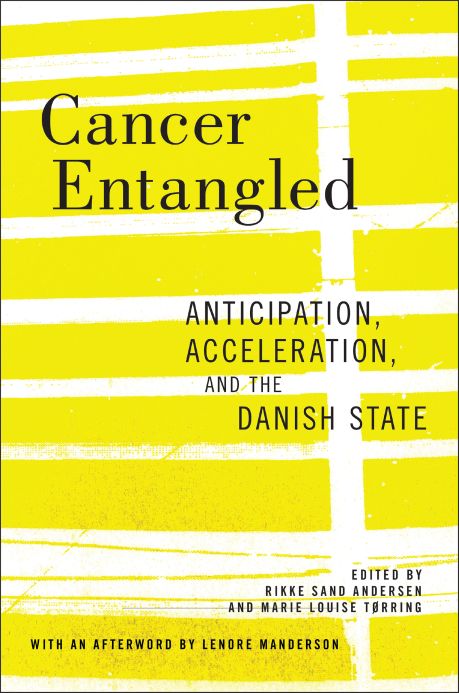
Edited by Rikke Sand Andersen and Marie Louise Tørring
Cancer Entangled explores the shifts that took place in Denmark around the millennium, when health promoters set out to minimize delays in cancer diagnoses in hope of improving cancer survival. The authors suggest a temporal reframing of cancer control that emphasizes the importance of focusing on how people – potential patients as well as health care professionals – experience and anticipate cancer before a diagnosis or a prediction has been made. This argument compellingly challenges and augments anthropological work on cancer control that has privileged attention to the productive role of science and technology and to life with cancer or cancer risk. By offering rich ethnographic insights into the introduction of the first cancer vaccine, cancer signs and symptoms, public discourses on delays, social class and care seeking, cancer suspicion in the clinic, as well as the work on fast-track referral – the book convincingly situates cancer control in an ethical registrar involving attention to acceleration and time, showing how cancer waiting times become an index of the “state of the nation”.
Read the book here.
 Decolonising Global Health Archive