Covid-19 Crisis and Long-Term Transformations: Alternatives From India

By Ashish Kothari

In this article, Kothari analyzes the Indian government’s response to the COVID-19 pandemic, reflects on how communities live with each other through such crises, and what these social reactions reveal about the future. In doing so, Kothari reveals the power of localization and direct democracy via self-governance, uplifting agroecological approaches and strengthening healthcare systems.

Read the article here.

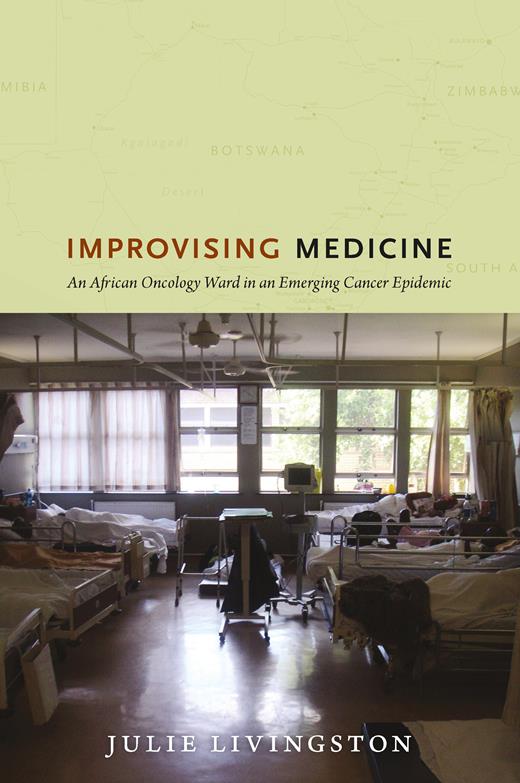
Improvising Medicine: An African Oncology Ward in an Emerging Cancer Epidemic

By Julie Livingston

In Improvising Medicine, Livingston tells the story of Botswana’s only dedicated cancer ward, located in its capital city of Gaborone. This affecting ethnography follows patients, their relatives, and ward staff as a cancer epidemic emerged in Botswana. The epidemic is part of an ongoing surge in cancers across the Global South; the stories of Botswana’s oncology ward dramatize the human stakes and intellectual and institutional challenges of an epidemic that will shape the future of global health. They convey the contingencies of high-tech medicine in a hospital where vital machines are often broken, drugs go in and out of stock, and bed-space is always at a premium. They also reveal cancer as something that happens between people. Serious illness, care, pain, disfigurement, and even death emerge as deeply social experiences. Livingston describes the cancer ward in terms of the bureaucracy, vulnerability, power, biomedical science, mortality, and hope that shape contemporary experience in southern Africa. Her ethnography is a profound reflection on the social orchestration of hope and futility in an African hospital, the politics and economics of healthcare in Africa, and palliation and disfigurement across the Global South.

Read the book here.
Becoming Modern: Healthcare and History in India

By Kiran Kumbhar

‘Becoming Modern: Healthcare and History in India’ is a podcast about history and historians, hosted by Kiran Kumbhar and produced by the multilingual-multi-generational podcast platform Suno India. It explores the history of medicine and public health in India, and focuses on events and developments which occurred primarily in the 1800s, and which laid the foundations for the later development of healthcare and health policy in India.

The podcast traces the genesis of many of contemporary India’s healthcare structures and institutions, and provides the necessary historical context to why healthcare in the country today is the way it is. This knowledge about India’s medical past is provided directly by historians who have worked on medicine and public health in British colonial India. They are featured regularly in the show and also provide insights into their personal journey of becoming historians, and into how they write history and what social scientific methods they use to analyze the past and enlighten people about historical personalities, events and ideas.

Listen to the series here.

Create a website or blog at WordPress.com

Up ↑