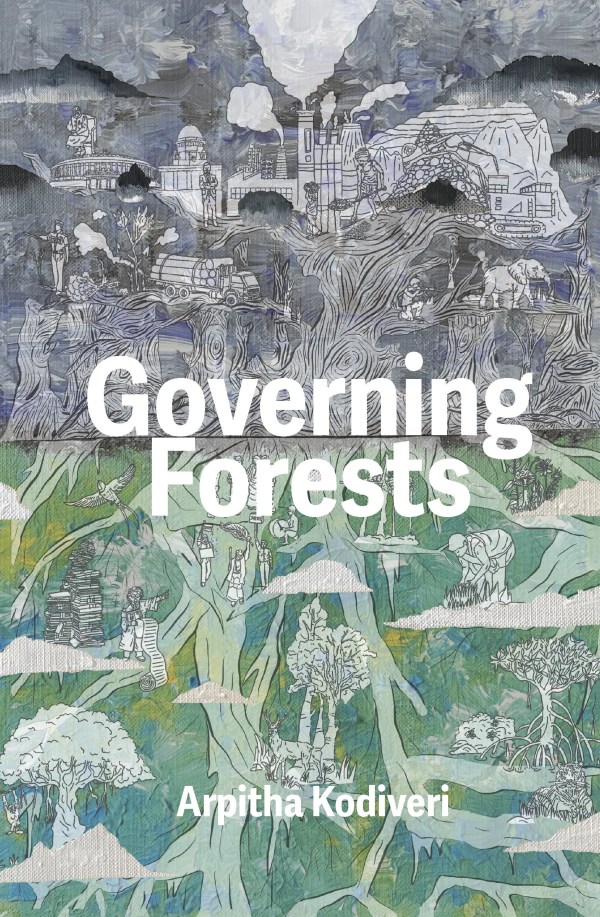
Governing Forests: State, Law and Citizenship in India’s Forests

By Arpitha Kodiveri

The nations of the Global North are responding to the climate change emergency with emissions trading schemes and alternative sources of energy. Meanwhile, nations of the Global South, still emerging from historical exploitation under colonialism, face decisions about natural resource use that are, for traditional owners and inhabitants of resource – rich lands, often a matter of life or death.

This book is the culmination of seven years immersed in the legal struggles of diverse forest-dwelling communities in India. Inspired by these social movements, Kodiveri tell the stories of how adivasi communities are using and shaping the law through clever legal interpretation and activism. The law Kodiveri shows is expanded, reframed and rendered malleable by forest-dwelling indigenous communities to be inclusive of their visions of justice, all while other laws seek to criminalize and erase their rights to land and waters.

Read the book here.
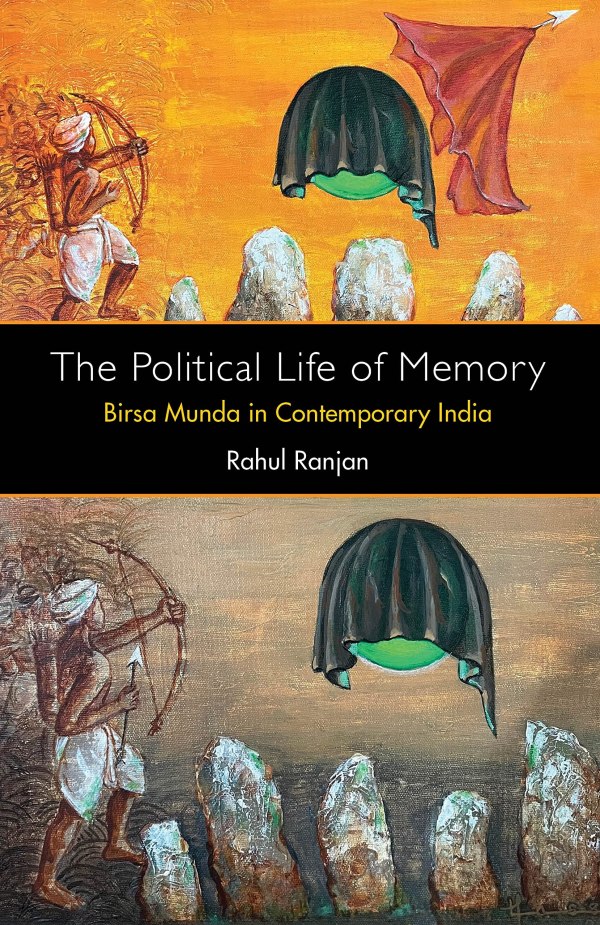
The Political Life of Memory: Birsa Munda in Contemporary India

By Rahul Ranjan

This book examines the representation of Birsa’s political life, memory politics and the making of anticolonialism in contemporary Jharkhand. It offers contrasting features of political imaginations deployed in developing memorial landscapes. Framing of Birsa in the heroic narrative through a grand scale of memorialisation, often in the form of the built environment, curates a selective version. This isolates the scope of elaborating his political ideas outside the confines of atypical historical records and their relevance in the contemporary context. The book argues that everyday politics through affective sites such as memorials and statues produce political visions, emotions, and opportunities. It shows how such symbolic sites are often strategically placed and politically motivated to inscribe ideologies. This process outlines how the state and Adivasi use memory as a political tool to lay claims to the past of the Birsa Movement.

Read the book here.

Cancer and the Kali Yuga: Gender, Inequality, and Health in South India

By Cecilia Coale Van Hollen

As news spread that more women died from breast and cervical cancer in India than anywhere else in the world in the early twenty-first century, global public health planners accelerated efforts to prevent, screen, and treat these reproductive cancers in low-income Indian communities. Cancer and the Kali Yuga reveals that women who are the targets of these interventions in Tamil Nadu, South India, hold views about cancer causality, late diagnosis, and challenges to accessing treatment that differ from the public health discourse. Cecilia Coale Van Hollen’s critical feminist ethnography centers and amplifies the voices of Dalit Tamil women who situate cancer within the nexus of their class, caste, and gender positions. Dalit women’s narratives about their experiences with cancer present a powerful and poignant critique of the sociocultural and political-economic conditions that marginalize them and jeopardize their health and well-being in twenty-first-century India.

Read the book here.

Covid-19 Crisis and Long-Term Transformations: Alternatives From India

By Ashish Kothari

In this article, Kothari analyzes the Indian government’s response to the COVID-19 pandemic, reflects on how communities live with each other through such crises, and what these social reactions reveal about the future. In doing so, Kothari reveals the power of localization and direct democracy via self-governance, uplifting agroecological approaches and strengthening healthcare systems.

Read the article here.

Humoural Concepts of Mental Illness in India

By Sushrut Jadhav

Based on interviews with patients at three allopathic psychiatric clinics in Bombay, Bangalore and Varanasi to elicit indigenous explanations of illness and patterns of prior help seeking, the paper discusses popular humoral theories of mental disorder. Even though most laypersons are unfamiliar with the content of the classical treatises of Ayurveda, the humoral traditions which they represent influence current perceptions. Case vignettes clarify the nature of the relationship between cultural, familial and personal factors that influence the experience of illness.

Read the article here.

The Political Stakes of Cancer Epistemics

By Shagufta Bhangu, Violeta Argudo-Portal, Luiz Alves Araújo Neto, Thandeka Cochrane, Masha Denisova, Nickolas Surawy-Stepney.

The authors demonstrate a transnationally situated dialogue as a method to bring ethnographic and historical research in Brazil, East Africa (Kenya, Tanzania and Uganda), India, Russia and Spain into conversation to show three cancer epistemics sites (research, detection, and care access) where the politics of cancer epistemics are at play. First, in the field of research, they show how certain ways of knowing, and certain questions about and interests in cancer, are privileged over others. Using examples from Spain and East Africa, they highlight how a shift towards microbiological and high-technology research has outpriced many more locally grounded research agendas, ignoring questions of industrial and capital accountability in cancer aetiology. Second, they look at ways of making cancer visible, how knowledge is mobilised in cancer detection and screening, where and for whom. The authors discuss the increased individualisation of risk which is reframing cancer surveillance and therapeutic agendas. Using examples from India, Spain and Brazil, the authors demonstrate how the epistemics of cancer detection generate discourses of blame and responsibility at the individual level and accentuate existing inequities whilst simultaneously absorbing patients and their families into complex networks of surveillance. Lastly, they examine how the epistemics of cancer implicate the very possibilities of accessing cancer care, shaping care pathways and possibilities for patients. With ethnographic examples from India, Russia and Brazil, the authors demonstrate how an orientation towards the individual shifts attention away from the commercialisation of healthcare and dominance of logics of profit in therapeutics.

Read the article here.

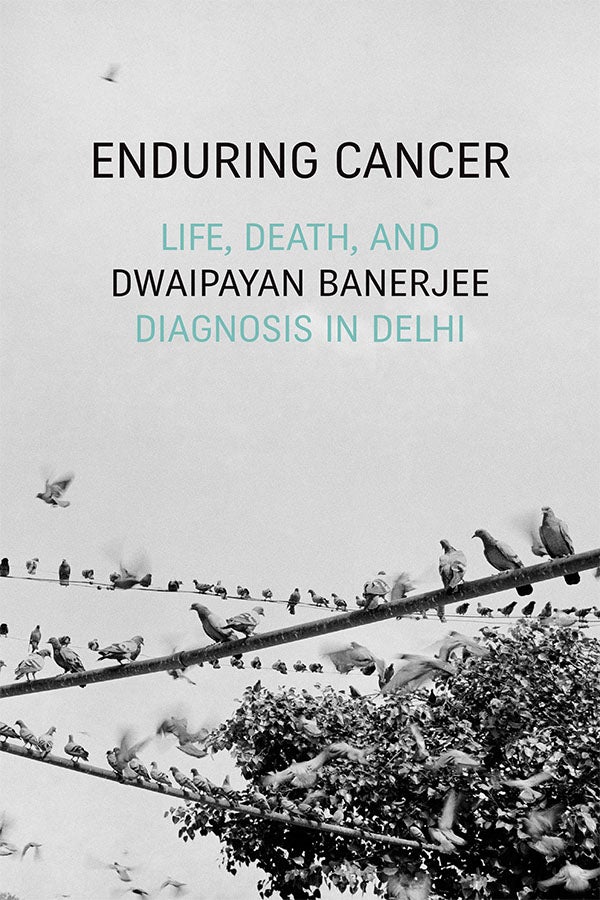
Enduring Cancer: Life, Death, and Diagnosis in Delhi

By Dwaipayan Banerjee

In Enduring Cancer Dwaipayan Banerjee explores the efforts of Delhi’s urban poor to create a livable life with cancer as patients and families negotiate an overextended health system unequipped to respond to the disease. Owing to long wait times, most urban poor cancer patients do not receive a diagnosis until it is too late to treat the disease effectively. Drawing on ethnographic fieldwork in the city’s largest cancer care NGO and at India’s premier public health hospital, Banerjee describes how, for these patients, a cancer diagnosis is often the latest and most serious in a long series of infrastructural failures. In the wake of these failures, Banerjee tracks how the disease then distributes itself across networks of social relations, testing these networks for strength and vulnerability. Banerjee demonstrates how living with and alongside cancer is to be newly awakened to the fragility of social ties, some already made brittle by past histories, and others that are retested for their capacity to support.

Read the full book here.

Outcaste Bombay: City Making and the Politics of the Poor

By Juned Shaikh

Juned Shaikh’s richly researched and perceptively argued monograph, Outcaste Bombay: City Making and the Politics of the Poor, subverts the idea that the various processes of modernity, including urbanization and industrial capitalism, would eventually diminish caste hierarchies and engender new social dynamics. As Shaikh shows, such modernist hopes remained unfulfilled in the late nineteenth- and twentieth-century industrial center of Bombay. Instead, “caste hid in plain sight in the city” (5). It not only sustained the growth and expansion of capitalism by facilitating industrial investments through caste and kinship credit networks but was also vital for the recruitment, disciplining, and housing of the city’s labor force. The book examines this “symbiotic relationship” between caste and capitalism by focusing on the built environment—housing policies and urban planning—and the language of Bombay’s Marxist and Dalit literature. In existing social histories of capitalism and labor in Bombay, questions of caste appear as inconsequential. Shaikh rightly points out that in the historical narrative of modern Bombay “Dalits are a marginal presence because they appear fleetingly in [official] sources like the Labour Gazette” (35). Shaikh has addressed this gap by exploring an impressive Marathi language archive and by incorporating the insights of Dalit studies into his excellent work.

Read the full book here.

Waiting on Empire: A History of Indian Travelling Ayahs in Britain

By Arunima Datta

The expansion of the British Empire facilitated movement across the globe for both the colonizers and the colonized. Waiting on Empire focuses on a largely forgotten group in this story of movement and migration: South Asian travelling ayahs (servants and nannies), who travelled between India and Britain and often found themselves destitute in Britain as they struggled to find their way home to South Asia.

Delving into the stories of individual ayahs from a wide range of sources, Arunima Datta illuminates their brave struggle to assert their rights, showing how ayahs negotiated their precarious employment conditions, capitalized on social sympathy amongst some sections of the British population, and confronted or collaborated with various British institutions and individuals to demand justice and humane treatment.

In doing so, Datta re-imagines the experience of waiting. Waiting is a recurrent human experience, yet it is often marginalized. It takes a particular form within complex bureaucratized societies in which the marginalized inevitably wait upon those with power over them. Those who wait are often discounted as passive, inactive victims. This book shows that, in spite of their precarious position, the travelling ayahs of the British empire were far from this stereotype.

Read the book here.

Mapping Mental Well-Being in India Initial Reflections on the Role of Psychiatric Spaces

By Clément Bayetti, Sushrut Jadhav and Sumeet Jain

This paper explores how two different sites—a psychiatric department and a community mental health programme embedded in a district hospital in India—construct their own peculiar understanding of mental well-being and recovery. Focusing initially on the nature of the discourse and practice emerging from a psychiatry department, this article demonstrates how members of the psychiatric profession in India are socialised into a conception of well-being narrowly defined by an absence of symptoms. It highlights how such notions emerge from the intersection existing between global paradigms such as “evidence-based medicine” and psychiatry’s “technological paradigm”. The authors argue that such conceptions of well-being can in turn be considered as both the articulation and operationalisation of a neoliberal capitalist ideology in which the hospital turns into a socially credited market where people’s “broken minds” can be fixed through the administration of psychotropic drugs, and through which recovery is narrowly conceptualised as paid employment. While such understanding may increasingly appears to fulfil the expectations of various social classes within Indian society by providing them a gateway to a form of global citizenship, this paper also shows how such notions feed into a state sponsored agenda of cost cutting public health care resources, thus impacting upon the well-being of both patients and professionals. This analysis also traces the ways in which this medicalised understanding of well-being evolves as these constructions of well-being diffuse out into wider society and become embedded into the national community mental health programme. In doing so, the paper explores ways in which such understanding may be reappropriated by people suffering from mental ill health and their communities, and the role that this plays in their personal and collective recovery.

Read the chapter here,

Create a website or blog at WordPress.com

Up ↑