Survivorship: A Sociology of Cancer in Everyday Life

By Alex Broom and Katherine Kenny

This book provides a contemporary and comprehensive examination of cancer in everyday life, drawing on qualitative research with people living with cancer, their family members and health professionals. It explores the evolving and enduring affects of cancer for individuals, families and communities, with attention to the changing dynamics of survivorship, including social relations around waiting, uncertainty, hope, willfulness, obligation, responsibility and healing. Challenging simplistic deployments of survivorship and drawing on contemporary and classical social theory, it critically examines survivorship through innovative qualitative methodologies including interviews, focus groups, participant produced photos and solicited diaries. In assembling this panoramic view of cancer in the twenty-first century, it also enlivens core debates in sociology, including questions around individual agency, subjectivity, temporality, normativity, resistance, affect and embodiment. A thoughtful account of cancer embedded in the undulations of the everyday, narrated by its subjects and those who informally and formally care for them, Survivorship: A Sociology of Cancer in Everyday Life outlines new ways of thinking about survivorship for sociologists, health and medical researchers and those working in cancer care settings.

Read the book here.

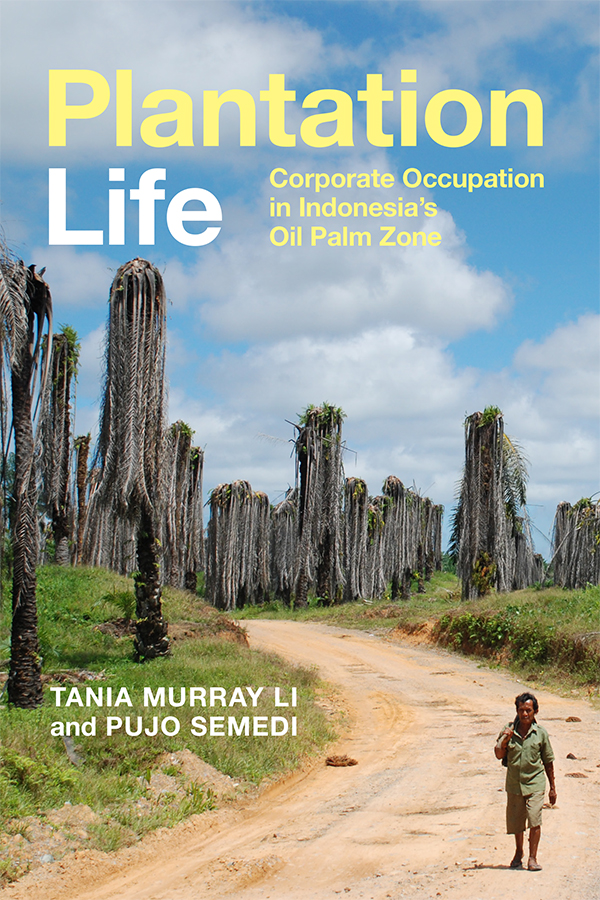
Plantation Life: Corporate Occupation in Indonesia’s Oil Palm Zone

By Tania Murray Li and Pujo Semedi

In Plantation Life, Tania Murray Li and Pujo Semedi examine the structure and governance of Indonesia’s contemporary oil palm plantations in Indonesia, which supply 50 percent of the world’s palm oil. They attend to the exploitative nature of plantation life, wherein villagers’ well-being is sacrificed in the name of economic development. While plantations are often plagued by ruined ecologies, injury among workers, and a devastating loss of livelihoods for former landholders, small-scale independent farmers produce palm oil more efficiently and with far less damage to life and land. Li and Semedi theorize “corporate occupation” to underscore how massive forms of capitalist production and control over the palm oil industry replicate colonial-style relations that undermine citizenship. In so doing, they question the assumption that corporations are necessary for rural development, contending that the dominance of plantations stems from a political system that privileges corporations.

Read the book here.

Create a website or blog at WordPress.com

Up ↑