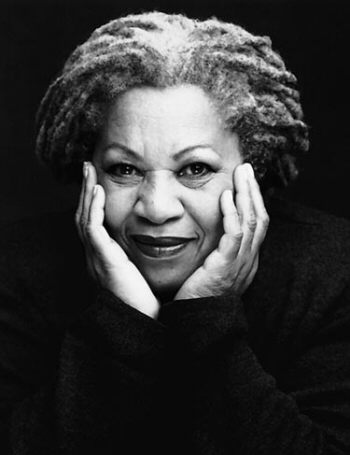
A Humanist View: A Speech

By Toni Morrison

Excerpt from [35:46]

“It’s important, therefore, to know who the real enemy is, and to know the function, the very serious
function of racism, which is distraction. It keeps you from doing your work. It keeps you explaining over and over
again, your reason for being. Somebody says you have no language and so you spend 20 years proving that you do. Somebody says your head isn’t shaped properly so you have scientists working on the fact that it is.
Somebody says that you have no art so you dredge that up. Somebody says that you have no kingdoms and so
you dredge that up.
None of that is necessary. There will always be one more thing.”

Read the full transcript here, listen to the full audio here.

Bodies in Evidence: Race, Gender, and Science in Sexual Assault Adjudication

By Heather R. Hlavka and Sameena Mulla

For victims in sexual assault cases, trials rarely result in justice. Instead, the courts drag defendants, victims, and their friends and family through a confusing and protracted public spectacle. Along the way, forensic scientists, sexual assault nurse examiners, and police officers provide their insight and expertise, shaping the story that emerges for the judge and jury. These expert narratives intersect with the stories of victims, witnesses, and their communities to reproduce our cultural understandings of sexual violence, but too often this process results in reinscribing racial, gendered, and class inequalities.

Bodies in Evidence draws on observations of over 680 court appearances in Milwaukee County’s felony sexual assault courts, as well as interviews with judges, attorneys, forensic scientists, jurors, sexual assault nurse examiners, and victim advocates. It shows how forensic science helps to propagate public misunderstandings of sexual violence by bestowing an aura of authority to race and gender stereotypes and inequalities. Expert testimony reinforces the idea that sexual assault is physically and emotionally recognisable and always leaves material evidence. The court’s reliance on the presence of forensic evidence infuses these very familiar stereotypes and myths about sexual assault with new scientific authority.

Read the book here.

Between a Rock and a Hard Place: Ethics of Fieldwork in Northwest Pakistan

By Ping-hsiu Alice Lin

Photo: Ihtasham Ali

In the wake of the US-led and Pakistan-allied “war on terror”, residents in Northwest Pakistan have faced inconceivable structural and physical violence, in ways that pose ethical challenges in ethnographic writing and research. Over the last few decades, militancy, banditry and overall insecurity have hampered relief efforts in the area and significantly weakened basic infrastructure. In this article, the author illustrates how an initial security plan to undertake fieldwork research in this “volatile” region proved somewhat irrelevant because of her positionality, gender and race/ethnicity. The author explores the implications of these dynamics in contexts characterized by unequal gender relations and strict gender segregation. In addition, undertaking empirical work in the context of epistemological frameworks in a region that has been subjected to active conflict, militarised operations and a singular representation in the global and local media, poses other ethical challenges for anthropologists searching for new areas of study and decolonised models of representation. This paper reiterates the importance of a reflexive approach of ethics that acknowledges the interpenetration of race, gender and the thick web of relationships in the production of knowledge and is, at the same time, respectful of cultural specificity.

Read more here.

Race matters in mental health: A view from inside mental health practice

By Suman Fernando

Institutional Racism in Psychiatry and Clinical Psychology is a book that explores race matters in mental health

Both ‘mental illness’ and ‘race’ are problematic concepts seriously challenged by sociological and historical study across cultures and continents. The nature of services for human beings provided under the umbrella of ‘mental health care’ is about lives of real people in real personal and social trouble partly, if not entirely, because of stigma, discrimination and oppressions. Ethnic minorities in Western societies, especially black people, are notoriously over-represented among people referred to mental health services underpinned by psychiatry and clinical psychology (the ‘psy’ disciplines).  But are the problems they face best seen as medical or even psychological problems?  And why are minorities seen as racial groups so seriously disadvantaged when they get caught up in the mental health system? 

Read more here.

Somalinimo: a love letter to Somali culture, blackness and Islam at Cambridge University

Young, British and Somali at Cambridge University

As students return to universities around the world, four British-Somali students talk about navigating one of Britain’s most elite institutions: Cambridge University. Their identity is rooted in Somalinimo (‘the essence of being Somali’) and in this love letter to Somali culture, blackness and Islam, they reflect on both belonging and marginalisation.  The women discuss conflicts with their parents, the sense of solidarity they have built at Cambridge, and the legacy they are creating for the next generation of British-Somalis. They give new meaning to an old Somali proverb: ‘Clothing that is not yours cannot shelter you from the cold’

Create a website or blog at WordPress.com

Up ↑