Our Collections

Patient’s Perspectives on Hospitalisation: Experiences from a Cancer Ward in Kenya

By Benson A. Mulemi

This paper explores how adult cancer in-patients feel about and make sense of their condition and therapy. Data was collected through observation and informal conversations with patients and hospital staff, over a period of 12 months, on a cancer ward in a teaching hospital in Kenya. Mulemi held in-depth conversations on multiple occasions with 42 patients. Most of them expected to recover quite fully, despite having postponed seeking medical help, and delays in referral. Long periods of suffering, prolonged diagnosis and treatment, and socio-economic difficulties shape the patients’ perspectives on hospitalisation. The low position of patients in the social and medical hierarchy, and inadequate hospital resources, hamper their capacity to negotiate their care. The needs of the cancer patients can better be met when their experiences during hospitalisation are understood. This can foster co-operation between patients and hospital staff to facilitate coping with chronic illness. The patients’ views highlight both material and non-material needs in cancer management in a developing country.

Read the article here.
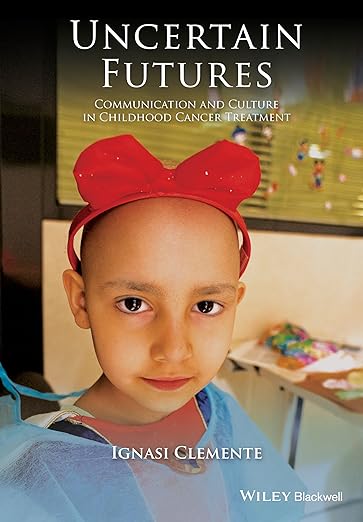
Uncertain Futures: Communication and Culture in Childhood Cancer Treatment

By Ignasi Clemente

This book examines children and young people’s attempts to participate in conversations about their own treatment throughout uncertain cancer trajectories, including the events leading up to diagnosis, treatment, remission, relapse, and cure or death. Clearly and compellingly written, Clemente relies on a new multi-layered method to identify six cancer communication strategies. This book illustrates that communication is central to how children, parents, and healthcare professionals constitute, influence, and make sense of the social worlds they inhabit—or that they want to inhabit. It provides ethnographic case studies of childhood cancer patients in Spain, using children’s own words, and examines the challenges of how to talk to and how to encourage patients’ involvement in treatment discussions. In his critique of the “telling” versus “not telling” debates, Clemente argues that communication should be adjusted to the children’s own needs, and that children’s own questions can indicate how much or little they want to be involved.

Read the book here.

Cancer and the Kali Yuga: Gender, Inequality, and Health in South India

By Cecilia Coale Van Hollen

As news spread that more women died from breast and cervical cancer in India than anywhere else in the world in the early twenty-first century, global public health planners accelerated efforts to prevent, screen, and treat these reproductive cancers in low-income Indian communities. Cancer and the Kali Yuga reveals that women who are the targets of these interventions in Tamil Nadu, South India, hold views about cancer causality, late diagnosis, and challenges to accessing treatment that differ from the public health discourse. Cecilia Coale Van Hollen’s critical feminist ethnography centers and amplifies the voices of Dalit Tamil women who situate cancer within the nexus of their class, caste, and gender positions. Dalit women’s narratives about their experiences with cancer present a powerful and poignant critique of the sociocultural and political-economic conditions that marginalize them and jeopardize their health and well-being in twenty-first-century India.

Read the book here.

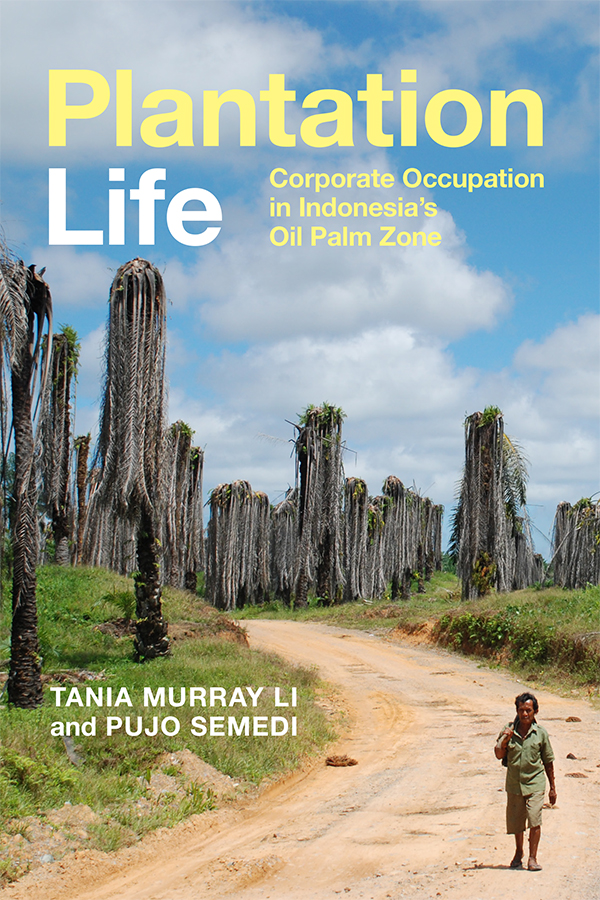
Plantation Life: Corporate Occupation in Indonesia’s Oil Palm Zone

By Tania Murray Li and Pujo Semedi

In Plantation Life, Tania Murray Li and Pujo Semedi examine the structure and governance of Indonesia’s contemporary oil palm plantations in Indonesia, which supply 50 percent of the world’s palm oil. They attend to the exploitative nature of plantation life, wherein villagers’ well-being is sacrificed in the name of economic development. While plantations are often plagued by ruined ecologies, injury among workers, and a devastating loss of livelihoods for former landholders, small-scale independent farmers produce palm oil more efficiently and with far less damage to life and land. Li and Semedi theorize “corporate occupation” to underscore how massive forms of capitalist production and control over the palm oil industry replicate colonial-style relations that undermine citizenship. In so doing, they question the assumption that corporations are necessary for rural development, contending that the dominance of plantations stems from a political system that privileges corporations.

Read the book here.

Covid-19 Crisis and Long-Term Transformations: Alternatives From India

By Ashish Kothari

In this article, Kothari analyzes the Indian government’s response to the COVID-19 pandemic, reflects on how communities live with each other through such crises, and what these social reactions reveal about the future. In doing so, Kothari reveals the power of localization and direct democracy via self-governance, uplifting agroecological approaches and strengthening healthcare systems.

Read the article here.

Preventive Strikes: Women, Precancer, and Prophylactic Surgery

By Ilana Löwy

Modern scientific tools can identify a genetic predisposition to cancer before any disease is detectable. Some women will never develop breast or ovarian cancer, but they nevertheless must decide, as a result of genetic testing, whether to have their breasts and ovaries removed to avoid the possibility of disease. The striking contrast between the sophistication of diagnosis and the crudeness of preventive surgery forms the basis of historian Ilana Löwy’s important study. Löwy traces the history of prophylactic amputations through a century of preventive treatment and back to a long tradition of surgical management of gynecological problems. In the early twentieth century, surgeons came to believe that removing precancerous lesions – a term difficult to define even today – averted the danger of malignancy. This practice, Löwy finds, later led to surgical interventions for women with a hereditary predisposition to cancer but no detectable disease. Richly detailed stories of patients and surgeons in the United States, France, and the United Kingdom allow Löwy to compare the evolution of medical thought and practice – and personal choice – in these different cultures.

Preventive Strikes aims to improve our understanding of professional, social, and cultural responses to cancer in the twenty-first century and to inform our reflections about how values are incorporated into routine medical practices.

Read the book here.

Personalised Cancer Medicine: Future Crafting in the Genomic Era [Internet]

By Anne Kerr, Choon Key Chekar, Emily Ross, Julia Swallow & Sarah Cunningham-Burley

What does it mean to personalise cancer medicine?

Drawing on an ethnographic study with cancer patients, carers and practitioners in the UK, this book traces their efforts to access and interpret novel genomic tests, information and treatments as they craft personal and collective futures. Exploring multiple experiences of new diagnostic tests, research programmes and trials, advocacy and experimental therapies, the authors chart the different kinds of care and work involved in efforts to personalise cancer medicine, as well as the ways in which benefits and opportunities are unevenly realised and distributed. Comparing these experiences with policy and professional accounts of the ‘big’ future of personalised healthcare, the authors show how hope and care are multi-faceted, contingent and, at times, frustrated in the everyday complexities of living and working with cancer.

Read the book here.

Africanizing Oncology: Creativity, Crisis, and Cancer in Uganda

By Marissa Mika

Over the past decade, an increasingly visible crisis of cancer in Uganda has made local and international headlines. Based on transcontinental research and public engagement with the Uganda Cancer Institute that began in 2010, Africanizing Oncology frames the cancer hospital as a microcosm of the Ugandan state, as a space where one can trace the lived experiences of Ugandans in the twentieth century. Ongoing ethnographic fieldwork, patient records, oral histories, private papers from US oncologists, American National Cancer Institute records, British colonial office reports, and even the architecture of the institute itself show how Ugandans understood and continue to shape ideas about national identity, political violence, epidemics, and economic life.

Africanizing Oncology describes the political, social, technological, and biomedical dimensions of how Ugandans created, sustained, and transformed this institute over the past half century. With insights from science and technology studies and contemporary African history, Marissa Mika’s work joins a new wave of contemporary histories of the political, technological, moral, and intellectual aspirations and actions of Africans after independence. It contributes to a growing body of work on chronic disease and situates the contemporary urgency of the mounting cancer crisis on the continent in a longer history of global cancer research and care. With its creative integration of African studies, science and technology studies, and medical anthropology, Africanizing Oncology speaks to multiple scholarly communities.

Read the book here.

Virtually Virgins: Sexual Strategies and Cervical Cancer in Recife, Brazil

By Jessica L. Gregg

This book provides a detailed, intimate portrait of a community of women living in a shantytown (favela) in northeastern Brazil, while exploring the complex interplay between gender, sexuality, power, and disease. It reveals how poor Brasileiras are constrained by dominant cultural constructions of female sexuality as a dangerous force that must be controlled by men; yet these women also manipulate these expectations by using their sexuality as a means to secure economic support from men. The book argues that these constructions affect their interpretations of medical discourse on the prevention of cervical cancer. Since women view sex as both a force they can’t control and as a necessary tool for their survival, they choose to de-emphasize medical warnings against risky sexual behavior, with grave consequences for their health. The text is threaded with poignant, humorous, sometimes graphic, and always memorable depictions of the women’s lives in the shantytowns, making this serious anthropological study a highly readable one as well.

Read this book here.

On Infertile Ground: Population Control and Women’s Rights in the Era of Climate Change

By Jade S. Sasser

Since the turn of the millennium, American media, scientists, and environmental activists have insisted that the global population crisis is “back” – and that the only way to avoid catastrophic climate change is to ensure women’s universal access to contraception. Did the population problem ever disappear? What is bringing it back – and why now? In On Infertile Ground, Jade S. Sasser explores how a small network of international development actors, including private donors, NGO program managers, scientists, and youth advocates, is bringing population back to the center of public environmental debate. While these narratives never disappeared, Sasser argues, histories of human rights abuses, racism, and a conservative backlash against abortion in the 1980s drove them underground – until now.

Using interviews and case studies from a wide range of sites – from Silicon Valley foundation headquarters to youth advocacy trainings, the halls of Congress and an international climate change conference – Sasser demonstrates how population growth has been reframed as an urgent source of climate crisis and a unique opportunity to support women’s sexual and reproductive health and rights. Although well-intentioned – promoting positive action, women’s empowerment, and moral accountability to a global community – these groups also perpetuate the same myths about the sexuality and lack of virtue and control of women and the people of global south that have been debunked for decades. Unless the development community recognizes the pervasive repackaging of failed narratives, Sasser argues, true change and development progress will not be possible. On Infertile Ground presents a unique critique of international development that blends the study of feminism, environmentalism, and activism in a groundbreaking way. It will make any development professional take a second look at the ideals driving their work.

Read the book here.

Create a website or blog at WordPress.com

Up ↑